In a busy restaurant a booth rarely fails all at once. The front edge of the seat wears through where guests slide in, the end panel gets kicked, one cushion is stained beyond cleaning. On a conventionally built booth, with cover stapled to frame, that means stripping and re-upholstering the whole section, or replacing it. Repair-ready booths are built so the worn part comes away on its own.
How the parts separate
| Design | What comes off | How | Tools needed |
|---|---|---|---|
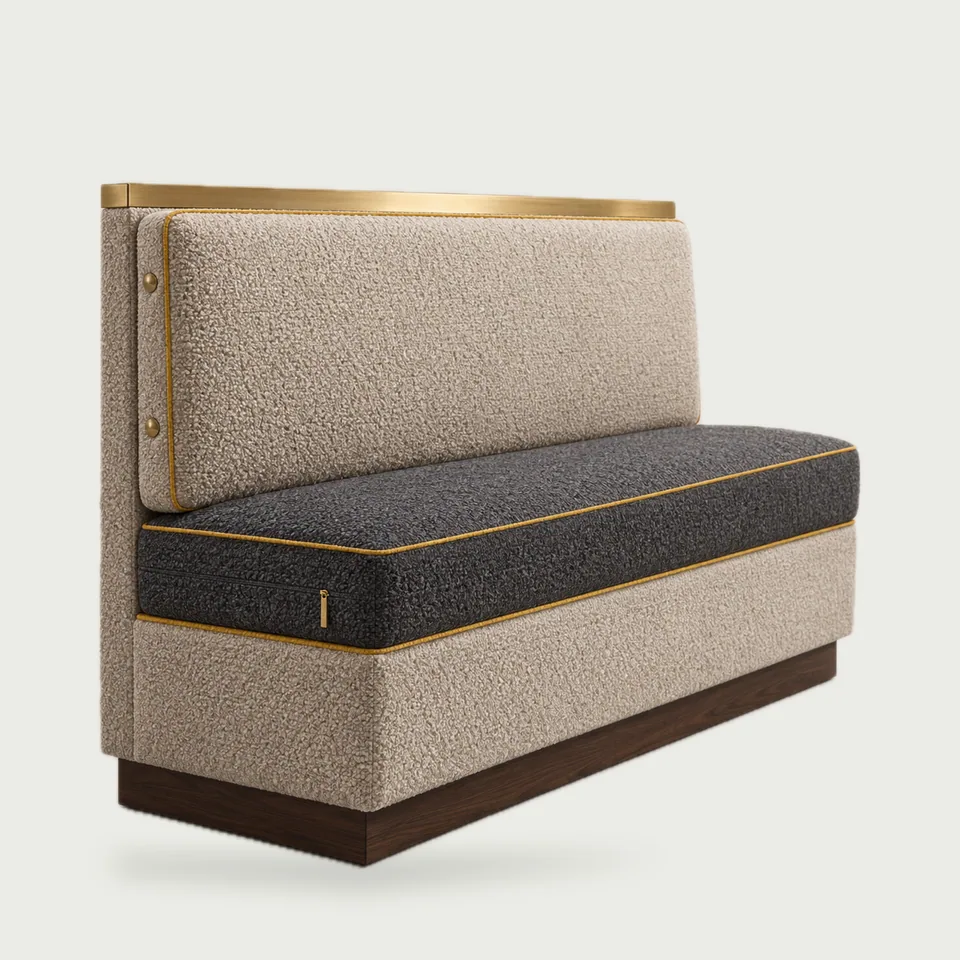
| Zip-cover booth | Seat and back covers | Concealed zips; cushions held by press studs | None |
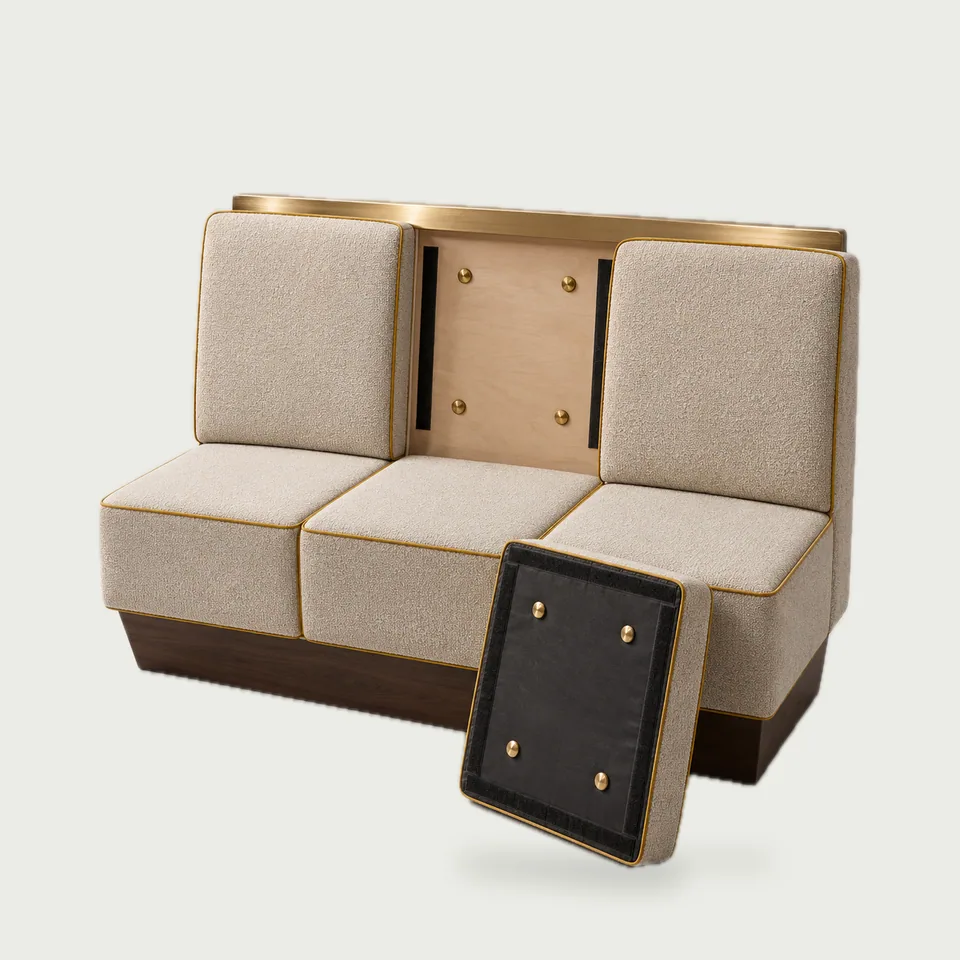
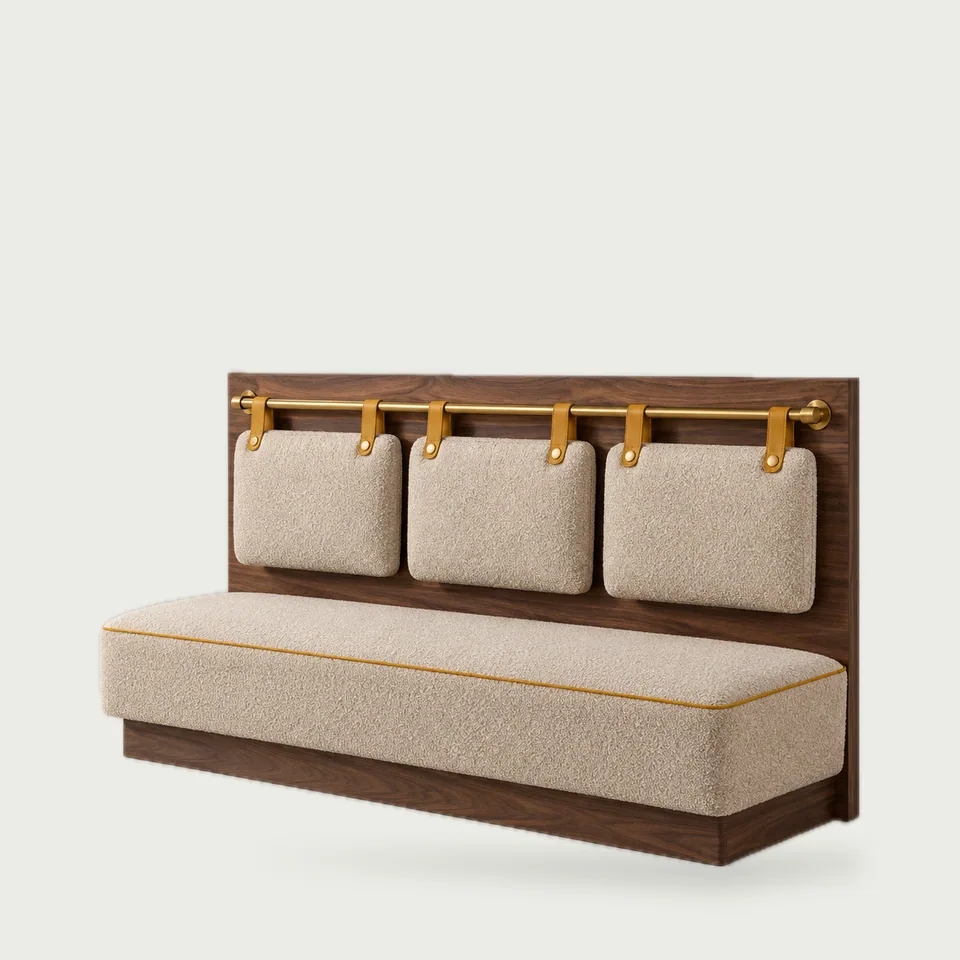
| Three-cushion service booth | Individual back and seat pads | Press studs and hook-and-loop | None |
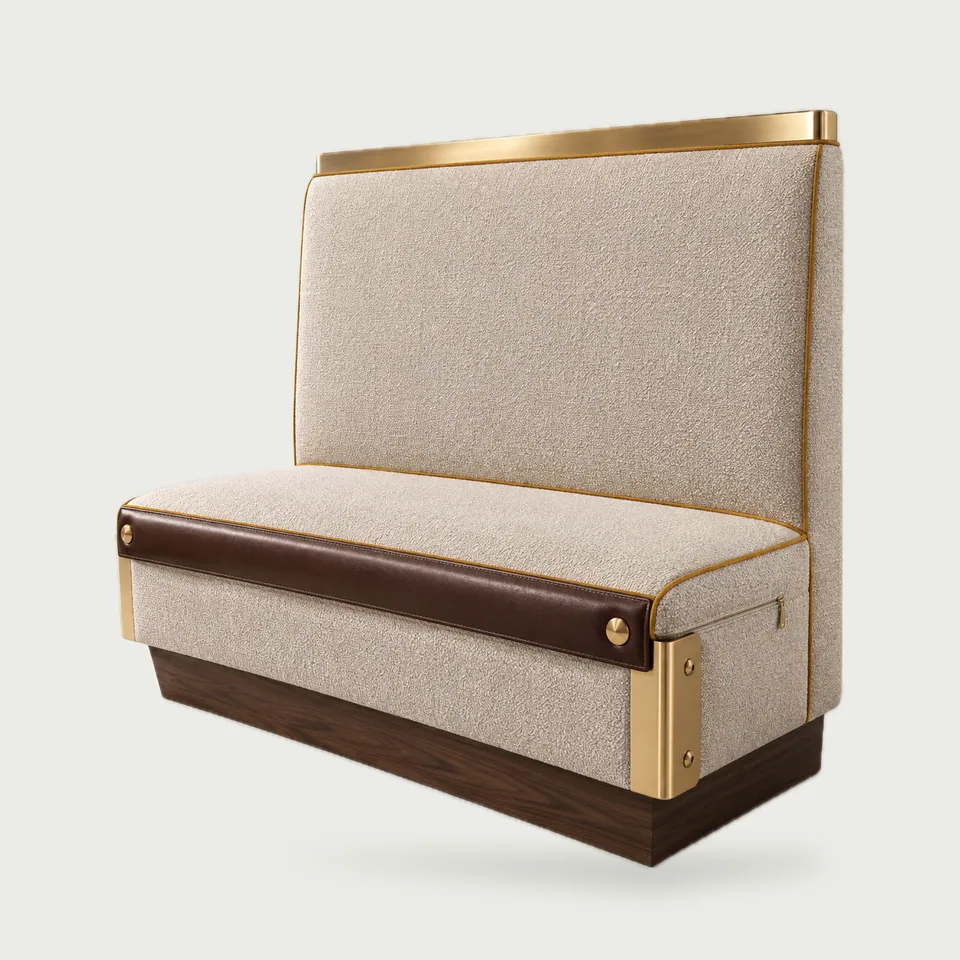
| Replaceable wear-edge booth | Seat front edge strip, end guard plates | Push-release clips | None |
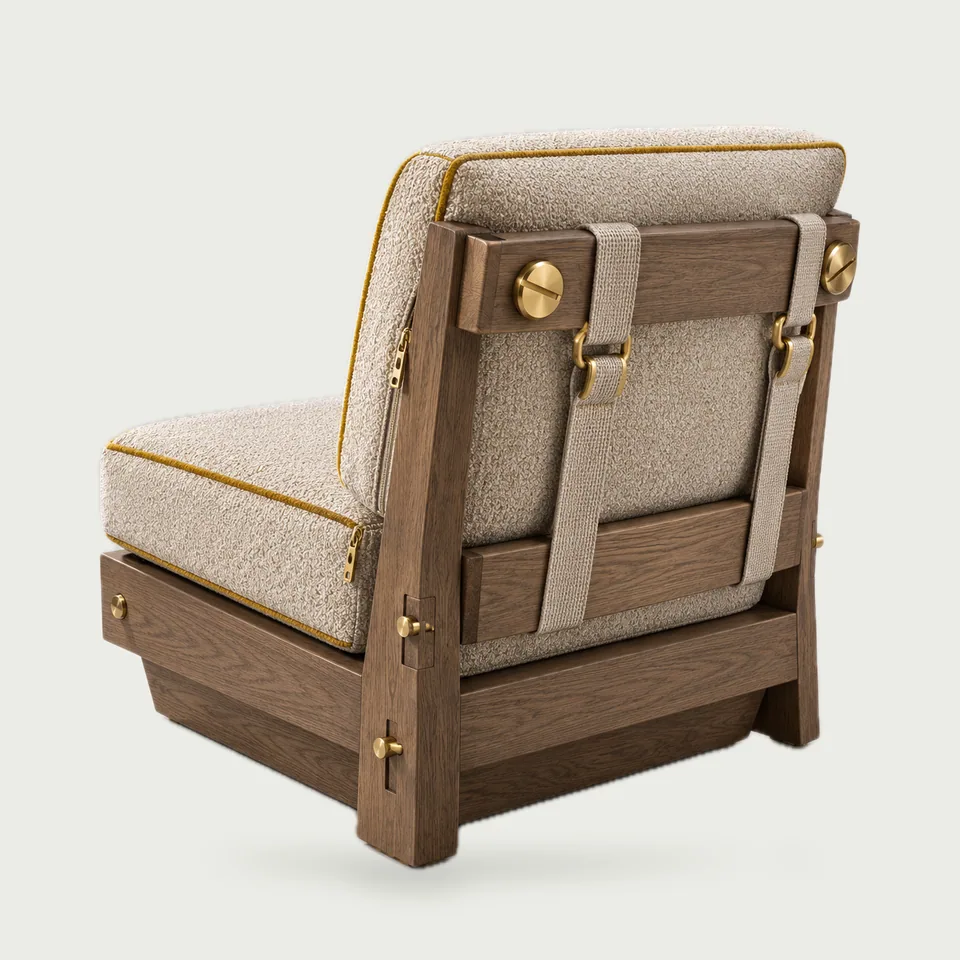
| Pin-and-peg booth | Cushions, covers, back, timber members | Hooks and straps, bolts, removable pins | Basic hand tools |
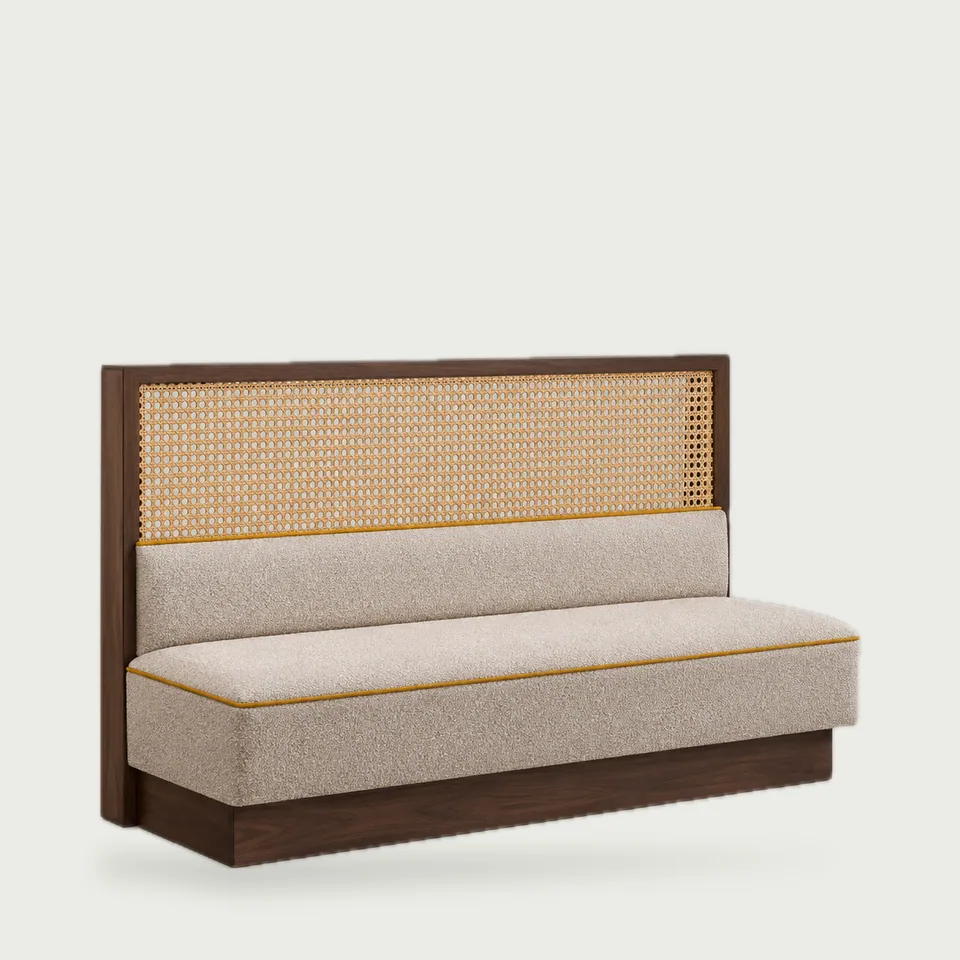
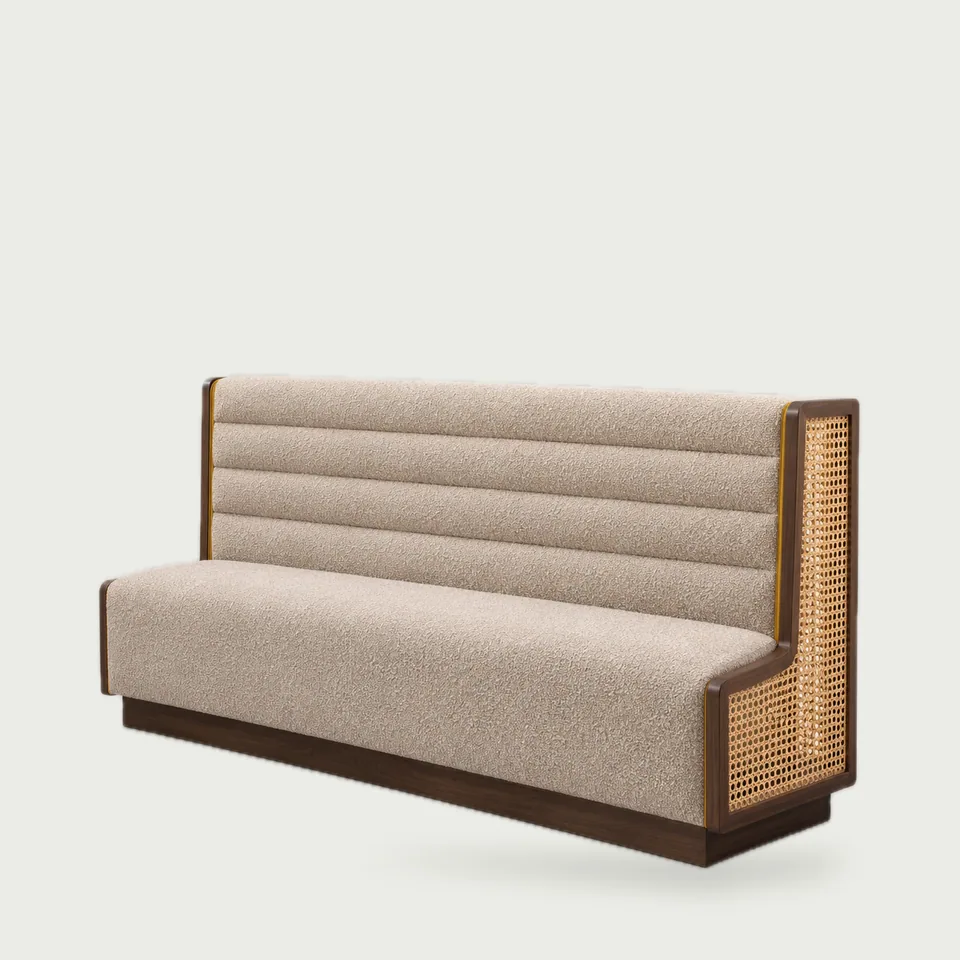
| Cane panel booth | Woven cane back and end panels | Screw-fixed panels | Screwdriver |
| Rail-and-cushion booth | Back cushions | Leather straps over a rail | None |
What this means in practice
A spare set of covers can be held on site and swapped during a closed day. A cushion can be sent for cleaning while a spare goes in. A worn front edge can be replaced in minutes rather than taking a table out of service for a week. When the room is redesigned, new covers go onto the same cushions and frames.
We issue a parts list with each order so replacements can be made to the original dimensions years later. Removable covers do need well-made zips and correctly sized cushions to keep a tailored look; we draw both on the shop drawings. Start with the Zip-Cover Booth or the Three-Cushion Service Booth.