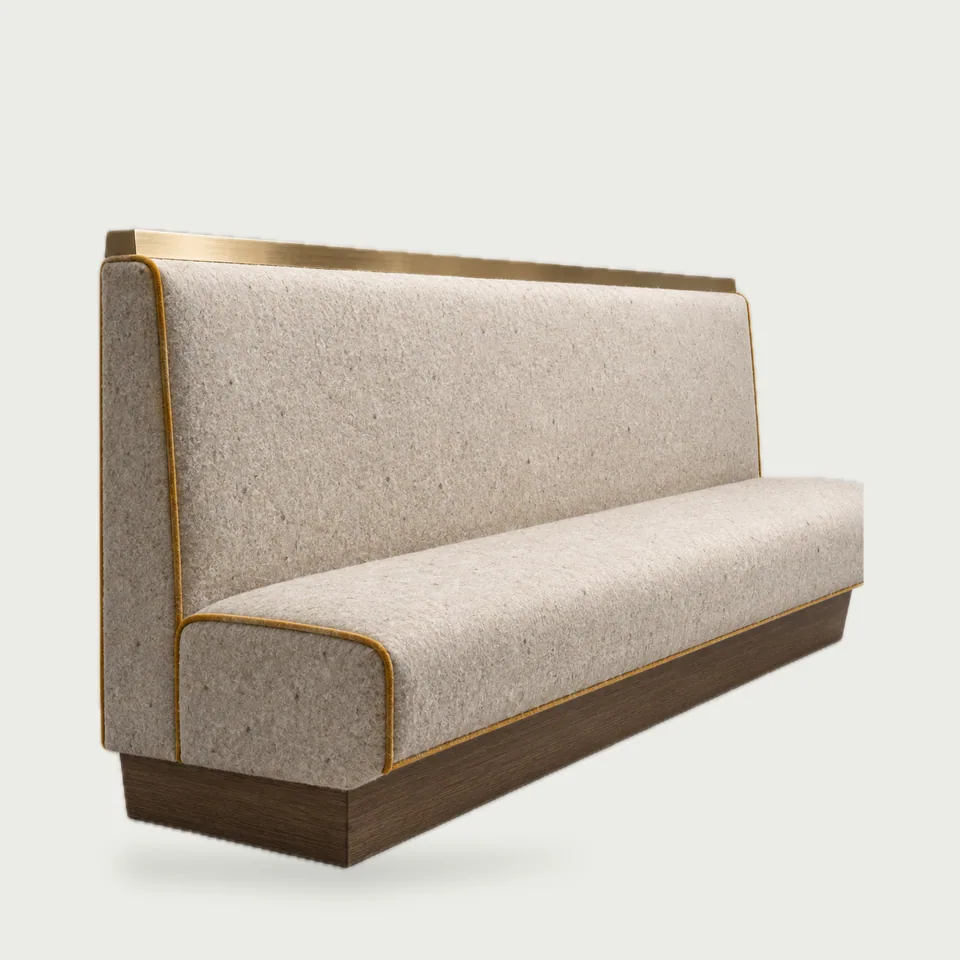
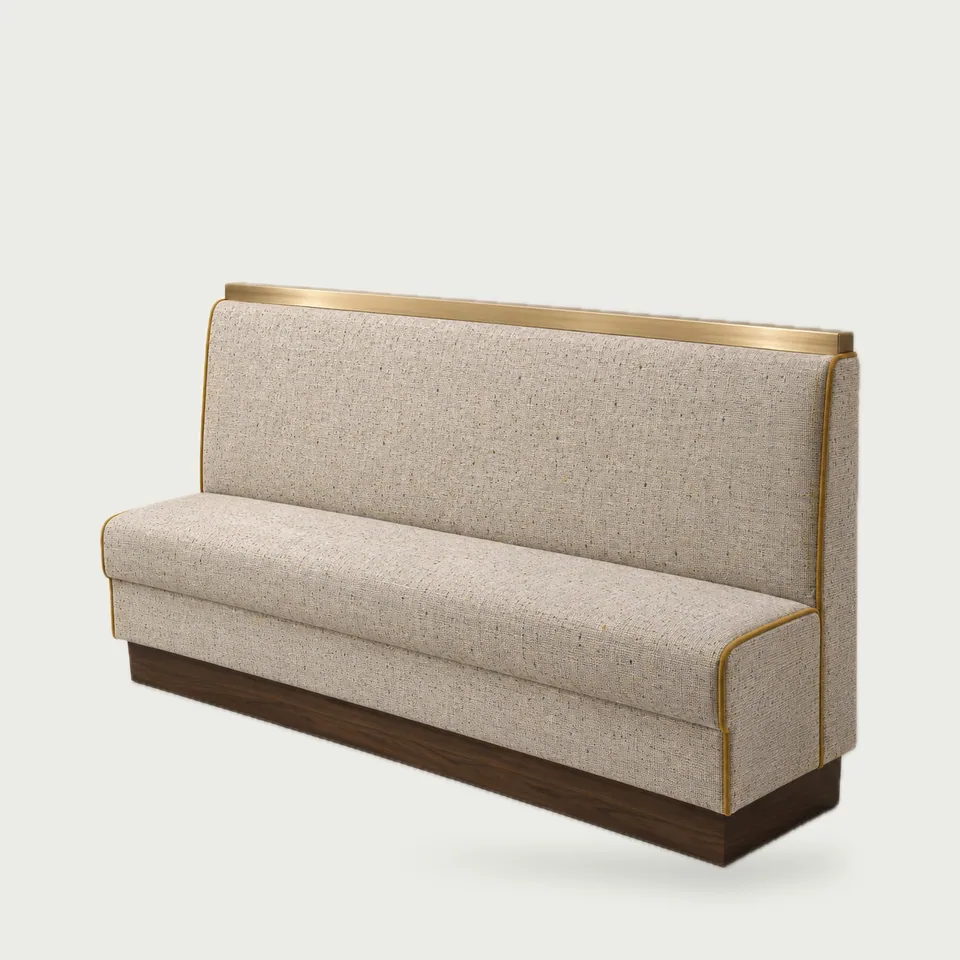
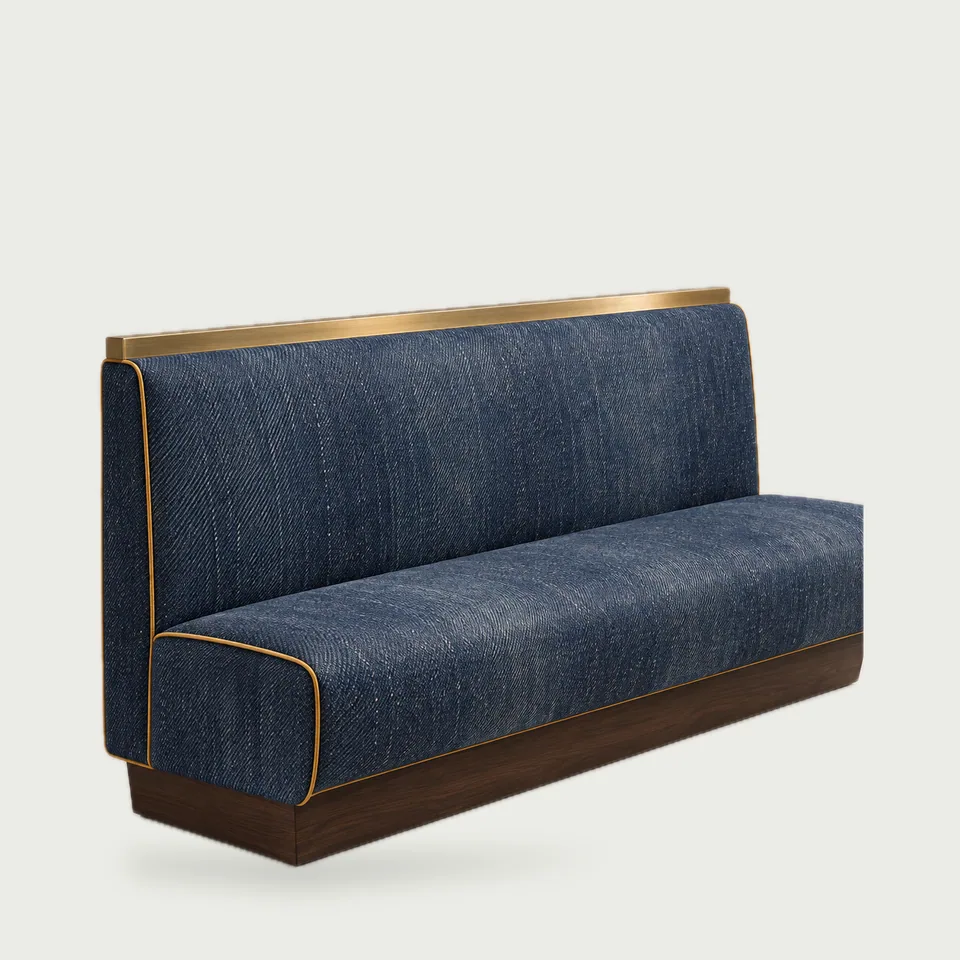
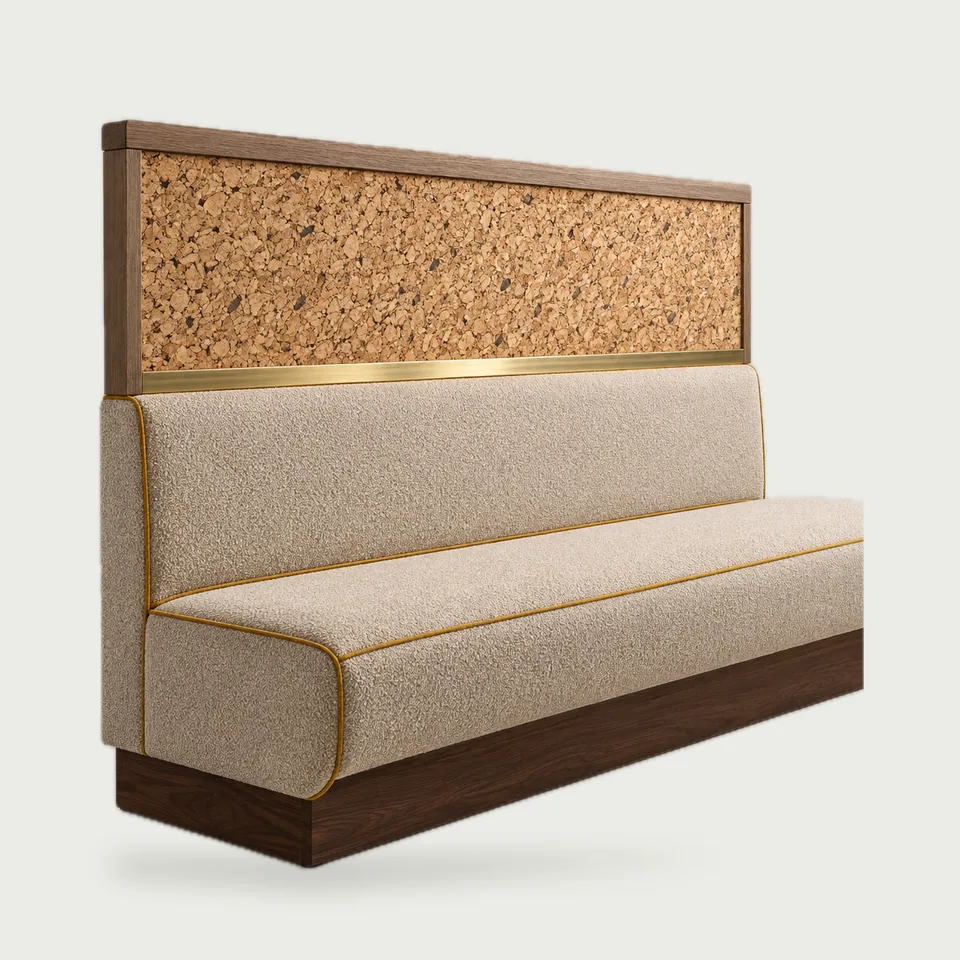
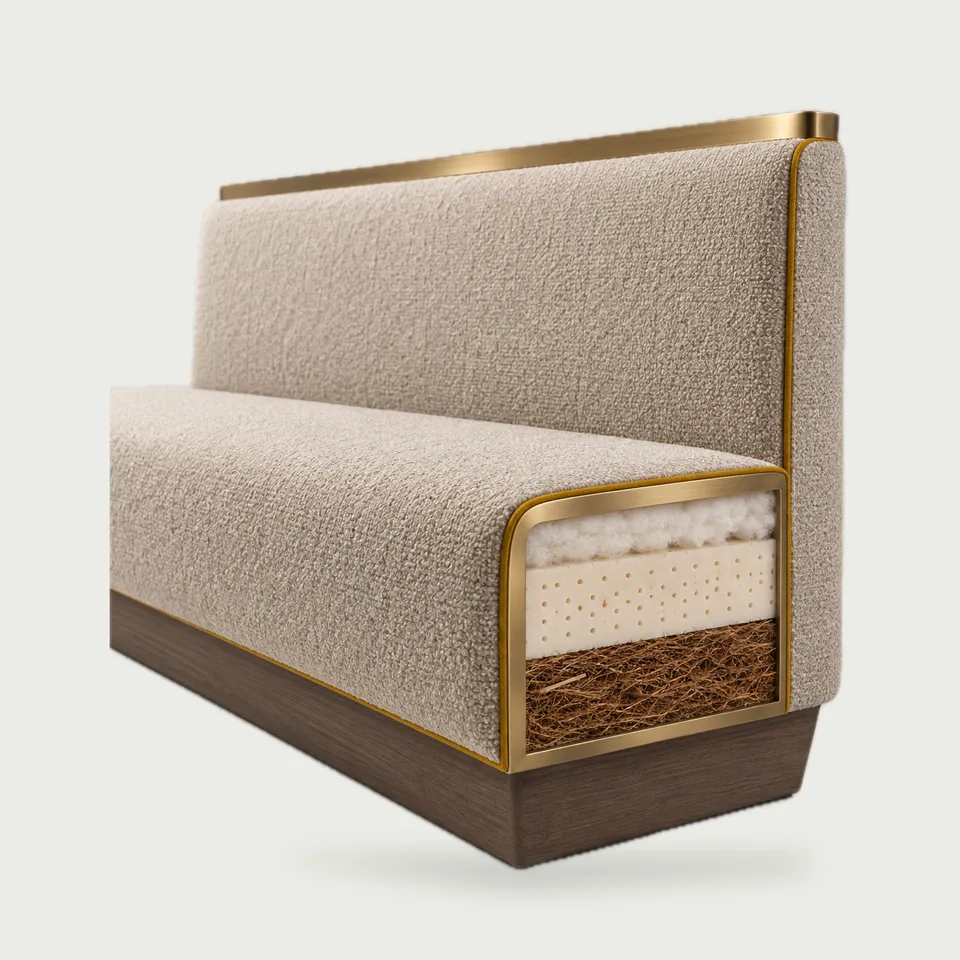
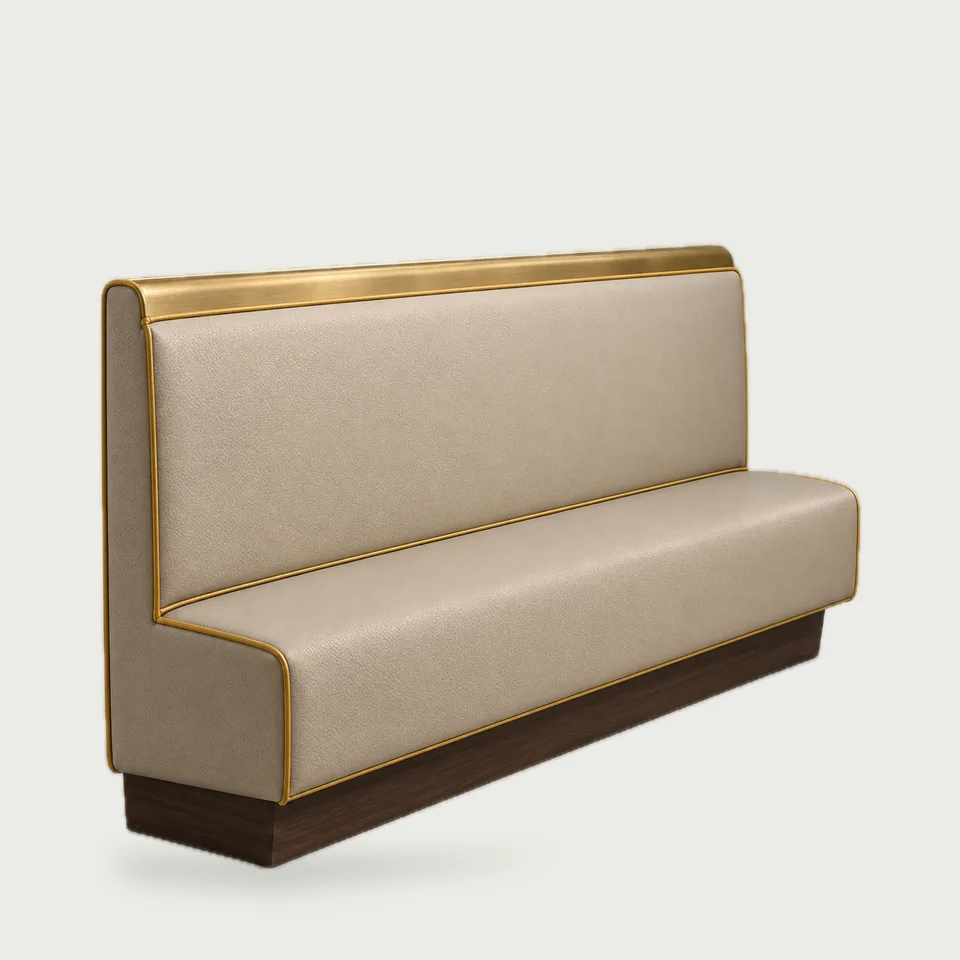
Covering choice is where many restaurant fit-outs try to show their environmental intent, and where the most exaggerated claims are made. This collection shows our standard booth built with different coverings and fillings. For each, we tell you what the material is, what evidence comes with it and what trade-offs it carries.
Coverings compared
| Material | What it is | Strengths | Watch out for |
|---|---|---|---|
| Wool | Natural animal fibre | Naturally harder to ignite than most fibres; resists soiling; renewable fibre | Price; some fire tests still need an interliner or finish |
| Recycled polyester | Polyester made from recycled feedstock, often PET bottles | Contract durability; uses waste feedstock | Still a plastic; sheds microfibres; recycled share varies by fabric |
| Recycled denim blend | Cotton fibre recovered from textile waste, blended | Distinctive look; re-uses textile waste | Recycled share and blend vary; check abrasion data |
| Plant-based leather alternative | Plant fibre or pulp with a binder and textile backing | Animal-free; leather-like look | Usually contains polyurethane; not simply biodegradable |
| Cork panel | Bark of the cork oak | Harvested without felling the tree; tactile; some sound absorption | For backs and panels, not seats |
| Latex and coir filling | Natural latex foam over coconut fibre | Alternative to petroleum-based foam | Weight, cost and fire-test planning |
Our evidence rule
We state fibre content and recycled content only as given on the supplier's data sheet, and we pass that sheet on to you. If a fabric is described as containing recycled material but the mill cannot document the percentage, we will not describe it as recycled. That protects your own public statements under the UK CMA Green Claims Code and EU consumer law.
Every covering still has to meet the fire rules for your market as a composite with the filling. See the Pure Wool Booth and our fabrics guide for detail.